
Ballet and Dance Physiotherapy
Dance physiotherapy applies the current evidence-based sports medicine theory and
practice to this specific population with a thorough understanding of what is required of a
dancer from junior student to pre-professional and professional levels.
Pre-pointe assessments
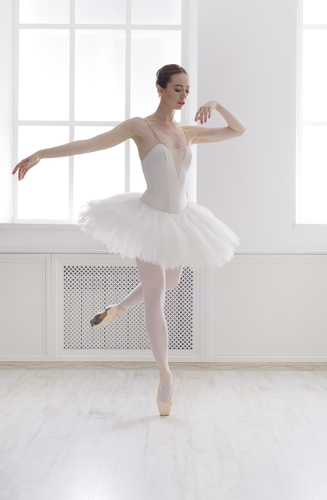
Pointe work traditionally commences at the age of 12 for female dancers. At this time, these girls are often undergoing growth spurts and their dance loading can double or triple making this a very risky time for dancers in terms of injury.
Pointe work requires a good foundation of classical ballet technique as well as specific foot, ankle, knee and hip strength and control to be undertaken safely and enjoyably.
If the dancer is strong and technically proficient in these areas when commencing pointe work, injury can be prevented and the development of poor habits can be avoided.
A pre-pointe assessment includes a thorough examination of the range of motion, strength and technical proficiency of the dancer. Current and past injuries, overall dance load, dance styles and age are considered. A tailored exercise program will be provided to address the individual dancer’s specific requirements.
A Pre-pointe report will be provided and copies available to your dance schools.
Assessment Cost: $1
Assessment
Identify what is going on for you and what the source of the problem is
Treatment
Provide you with treatment to get you moving in the right direction immediately
Plan/Prevention
Create a tailored solution to help treat and prevent dance injuries.
Safe return to dance
Let our team guide you from injury to a safe return to dance ensuring no issues or re injury.
Dance specific injuries
Ballet places particular demands and loads on a dancer’s body. A unique collection of injury types is therefore seen in dancers that are less common in the general population.
Common dance specific injuries include:
- Posterior ankle impingement
- Os Trigonum syndrome
- Flexor hallucis longus tenosynovistis
- Metatarsal stress reactions and fractures
- Patellofemoral pain syndome
- Anterior hip impingement
- Labral pathologies
- Hip flexor tendon pathology
Importance of prevention
A dancer’s body is paramount to their future health and success in the dance industry. With correct preventative measures and a sound technical foundation, injuries can be prevented and career length maximised. Certain strengthening exercises should be incorporated into a dancer’s daily conditioning routine, especially if the dancer is on pointe, to maintain adequate strength and stability.
About our Dance Physiotherapists

Clinical interests
- Low back pain
- Neck and thoracic (upper back) pain
- Hip and knee pain
- Shoulder conditions
- Dance and performing arts injuries
- Clinical Pilates
- Post-operative rehabilitation
Tonya is a Musculoskeletal Physiotherapist with a particular interest in low back pain. She also works with neck and upper back pain, hip and knee pain, and shoulder conditions. She has worked in both private practice and public hospitals, treating everything from acute injuries through to rehabilitation after surgery.
Before physiotherapy, Tonya completed an honours degree in Contemporary Dance at London Contemporary Dance School and went on to perform professionally as a ballet dancer. She then ran her own Pilates studio in the UK for six years and taught Pilates to physiotherapists with APPI. That background gives her a deep understanding of movement, and a lasting affinity for dancers and performing artists. During her studies she also gained work experience with The Australian Ballet.
Tonya completed her undergraduate physiotherapy degree at Monash University and her Master of Musculoskeletal Physiotherapy at La Trobe University in 2022.
Outside work, Tonya is a keen runner and has completed numerous half marathons and a full marathon.
Qualifications
- Master of Musculoskeletal Physiotherapy, La Trobe University (2022)
- Bachelor of Physiotherapy
- BA (Hons) Contemporary Dance, London Contemporary Dance School
- Former APPI Pilates instructor
Consults at: Physica Ringwood

Clinical interests
- Dance physiotherapy for all ages and levels
- Pre-pointe assessments
- Hip pain
- Pregnancy and postnatal musculoskeletal care
- Pre- and post-operative rehabilitation (hip and knee)
- Clinical Pilates and exercise
Miranda is a physiotherapist at Physica Ringwood who works with dancers of all ages and levels, especially ballet dancers. She runs pre-pointe assessments for young dancers getting ready to go up onto pointe, and also works with hip pain and rehabilitation before and after hip and knee surgery.
Miranda understands dance from the inside. She started her own ballet training as an adult, after 15 years of martial arts. She’s also passionate about supporting women through pregnancy and beyond, an interest that deepened after the birth of her first daughter.
Her approach combines education, hands-on treatment and exercise, often through Clinical Pilates, to help people understand their bodies and take an active role in their recovery.
Miranda completed a Bachelor of Health Science and Master of Physiotherapy at La Trobe University, followed by a Postgraduate Certificate in Musculoskeletal Physiotherapy in 2019. She is also APPI Pilates certified.
Qualifications
- Postgraduate Certificate in Musculoskeletal Physiotherapy (2019)
- Master of Physiotherapy, La Trobe University
- Bachelor of Health Science, La Trobe University
- APPI Pilates certification
Consults at: Physica Ringwood