

What we help with
- Hip, groin and buttock pain, including pain that has been present for years
- Hip impingement (FAI) and labral tears
- Hip dysplasia and instability, including microinstability
- Gluteal tendinopathy and hip bursitis — pain on the outside of the hip
- Hip osteoarthritis
- Groin pain, including osteitis pubis
- Piriformis and deep buttock pain
- Rehabilitation after hip surgery, including arthroscopy and joint replacement
- Hip and pelvic pain during pregnancy and after birth
What happens at your hip assessment
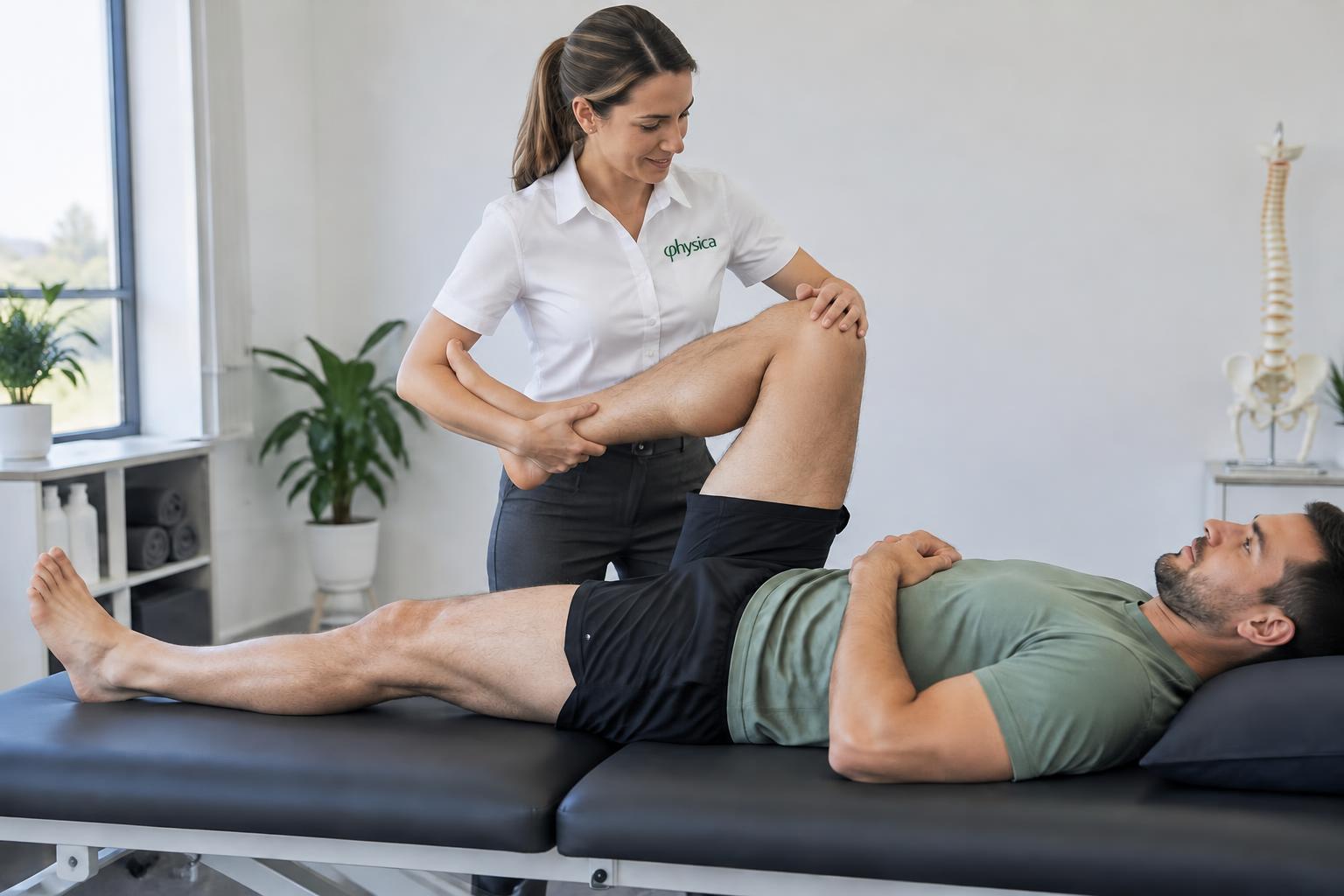
Your physiotherapist takes a history of where the pain sits, how long it has been there and what makes it better or worse. Then they examine how your hip moves, how much strength you have through it, and how you load it in everyday activities such as walking, stairs and standing on one leg.
Because hip pain is not always coming from the hip, we also look at your lower back and pelvis, and at your knees and ankles where those could be contributing.
You should leave your first appointment with a clear explanation of what is going on and a plan you can start straight away.
How we treat hip pain
- Exercise therapy and progressive loading for tendons, muscles and joints
- Manual and hands-on therapy where it helps your symptoms settle
- Load and activity management so you can keep working, training or playing while you settle
- Running, dance and return-to-sport progressions
- Structured programs before and after hip arthroscopy or joint replacement
- Referral to your GP, a radiologist or an orthopaedic surgeon when something needs investigating
Long-term hip pain
Pain that has been around for months or years is worth a careful look. Leesa Reid, Physica’s hip lead, has a particular interest in diagnosing and managing long-term hip pain, including hips that are unstable or dysplastic.
Where a hip is unstable or has structural differences, the plan usually centres on control and strength rather than rest alone. Where pain sits on the outside of the hip and comes from the tendons and bursa there, load management and graded strengthening are usually the main tools.
If you have hip osteoarthritis
Australian clinical guidelines recommend education and exercise as the first treatment for hip osteoarthritis. Physica runs the GLA:D® program, a structured education and exercise program for knee and hip osteoarthritis, at Ringwood, Knoxfield and Yarra Valley. You can read more on the GLA:D page or book a place.
Common questions
Do I need a referral to see a physiotherapist about my hip?
No. You can book directly with any of our physiotherapists, and HICAPS means private health rebates are processed on the spot. If you have a GP care plan, ask your GP whether your hip sessions can be claiming through it.
Will I need an X-ray or MRI?
Not always. Many hip problems are diagnosed from your history and examination, and treatment can start before any scan. Where imaging would change your plan, we can arrange it with your GP or a specialist and talk through what it does and does not tell us.
Is hip pain always coming from the hip?
No. Pain felt in the hip, groin or buttock can come from the lower back, the pelvis or the sacroiliac joint, and pain on the outside of the hip usually comes from the tendons and bursa there. Part of the assessment is working out where it is actually coming from.
How long will my hip rehab take?
It depends on the cause, how long it has been going and what you are working towards. We review progress at set points and change the plan if it is not tracking, rather than repeating what is not working.
Can you help before hip surgery?
Yes. Many people do a period of strength and education before surgery, and we then guide the rehabilitation afterwards, working with your surgeon’s instructions.
Which clinic should I book at?
Hip assessments are available at Ringwood, Knoxfield and Yarra Valley. Leesa consults at Yarra Valley and Daniel at Ringwood and Knoxfield. If you would like to see one of them specifically, book through their profile; otherwise choose the clinic closest to you.