
At Physica Knoxfield, neck and shoulder pain is one of the most common complaints we see from desk workers. Whether you're working from home a few days a week or sitting at a desk in an office, our physios know how debilitating the pain can become. It often starts as tightness at the end of the day and slowly turns into an ache that's there most of the time, sometimes with headaches. The good news is, a few simple changes to your setup and habits can often make a huge difference.
In this article we'll explain why desk work can lead to neck pain, how to set up your workstation as optimally as possible, the habits that can make the biggest difference, and when it's time to get it checked.
Is "bad posture" the problem?
We've all been told to sit up straight, but posture actually matters less than most people think. There's no single perfect sitting position, and people with very different, or "incorrect", postures can be completely pain-free.
What matters more is how long you stay in one position. Even a "good" posture becomes uncomfortable if you hold it for hours. As physios often say, the best posture is a moving posture.
Why desk work can lead to neck pain
Long periods without moving, especially on busy days with back-to-back meetings
Looking down at a laptop or phone for long stretches, which increases the load on the neck muscles
Makeshift home setups, like working from the couch, the bed or the kitchen table
Stress and deadlines, which often lead to tense shoulders and a clenched jaw without you even noticing
Poor sleep, which can make muscles more sensitive and pain harder to shake
Low overall activity, particularly when working from home means fewer steps in the day
Neck pain from desk work is often linked with tension-type headaches, too. Pain can start at the base of the skull and spread over the head or behind the eyes.
A simple desk setup checklist
Instead of splurging on expensive equipment, give the following tips a go:
Screen height: the top of your screen at or slightly below eye level, about an arm's length away.
Laptop users: raise the laptop on a stand or a stack of books, and use a separate keyboard and mouse. This is one of the most helpful changes for home workers.
Chair: sit back in the chair with your lower back supported. A rolled towel or small cushion can help if your chair doesn't have low back support.
Feet: flat on the floor or on a footrest, with your knees roughly level with your hips.
Keyboard and mouse: close to you, so your elbows rest by your sides and your shoulders can relax.
Phone: use a headset or speaker for long calls, rather than holding the phone between your ear and shoulder.
Lighting: reduce glare on the screen so you're not leaning in to see it.
The habits that matter most
Setup helps, but movement matters more:
Change position every 30 to 60 minutes. Stand up, walk to get a glass of water, or take a call standing.
Use a sit-stand desk if you have one, but alternate rather than standing all day.
Try a few gentle neck and shoulder movements through the day, such as shoulder rolls and slowly turning your head side to side.
Get outside for a walk at lunch. The Knox area has plenty of walking tracks and parks close to home.
Keep up regular exercise. General fitness and strength help your neck and shoulders cope with long days.
How physio can help
If your neck pain hasn't settled with these changes, a physio can help work out what's driving the pain. At Physica Knoxfield, a typical plan may include:
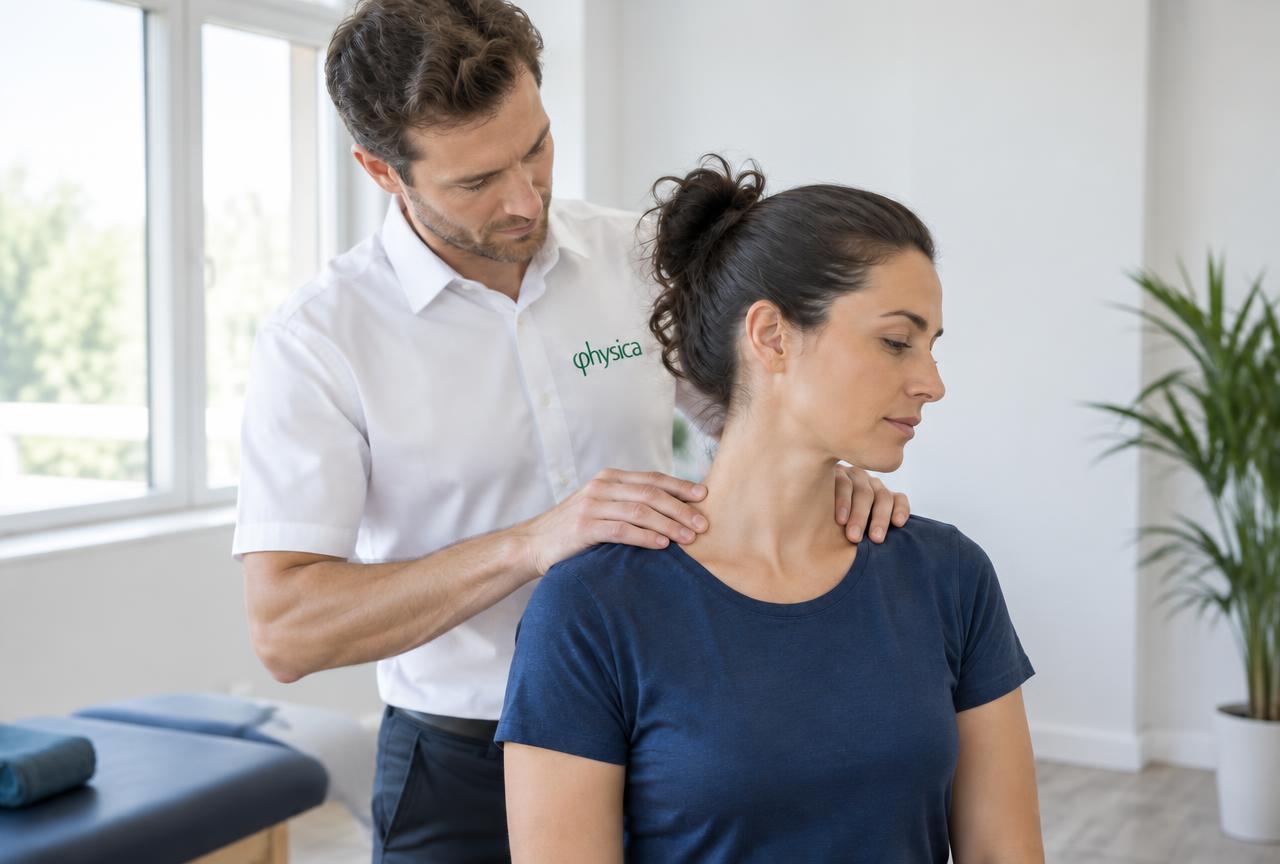
A comprehensive assessment of your neck, shoulders and upper back, including checking whether your pain is linked to headaches or nerve irritation
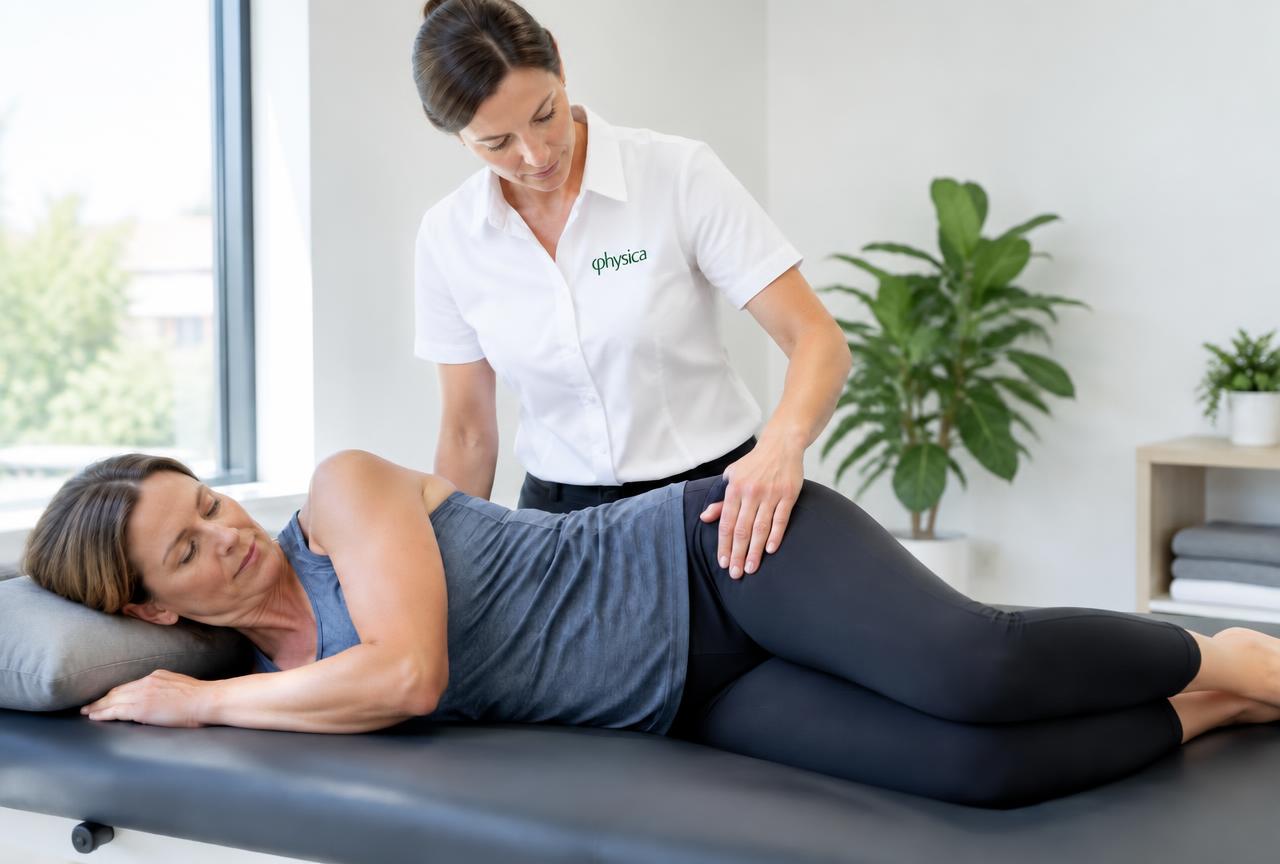
Hands-on therapy where it helps, to ease pain and stiffness
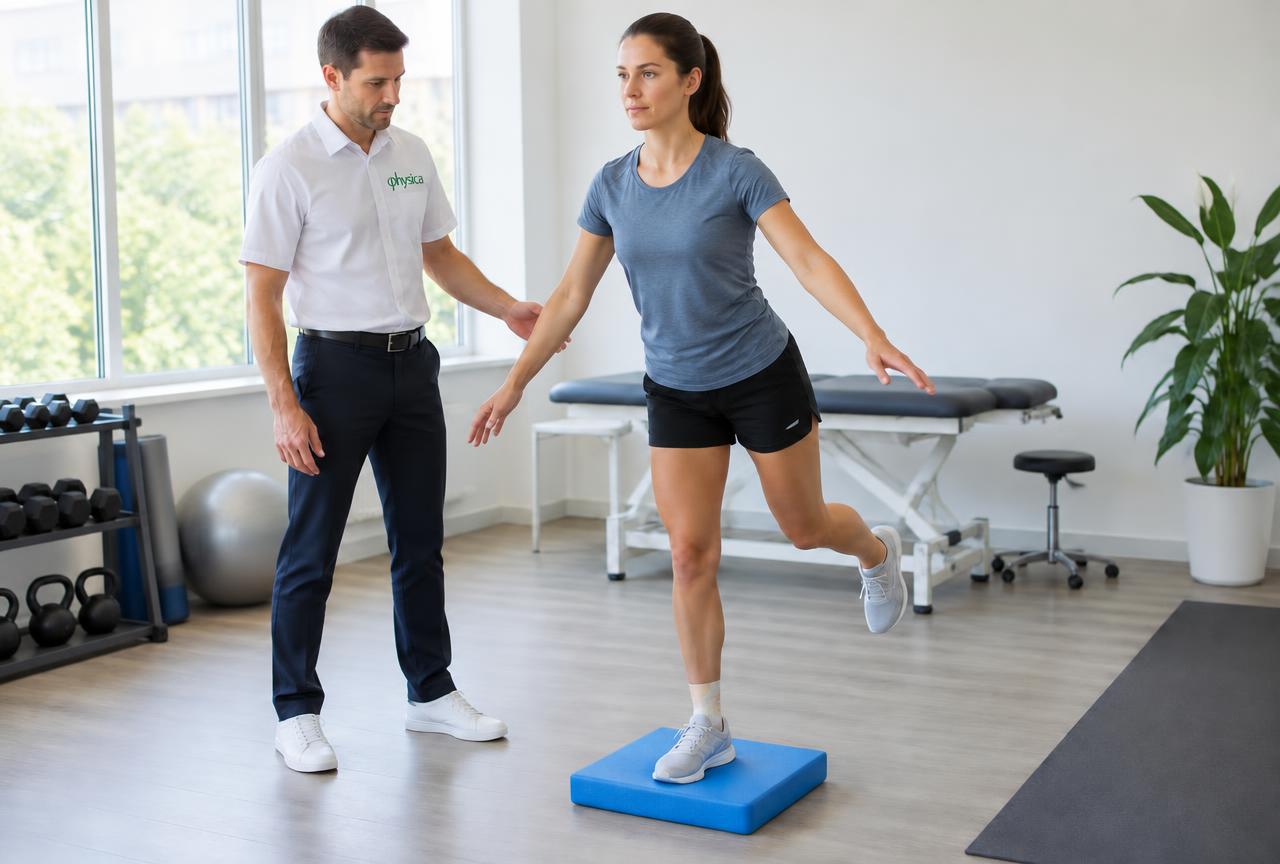
A personalised exercise program to improve strength and movement in your neck, shoulders and upper back
Advice on your workstation and daily routine, tailored to how you actually work
Everyone's recovery is different. Your physio will adjust your program as you go.
When to get it checked
It's worth booking a physio assessment if:
Your neck pain has lasted more than two or three weeks, or keeps coming back
You're getting regular headaches that seem to start in your neck
You have pain, pins and needles or numbness spreading into your shoulder, arm or hand
It's affecting your sleep, concentration or ability to work
Seek urgent medical care if your neck pain follows a car accident, fall or knock to the head, or comes with a sudden severe headache, dizziness, changes to your vision or speech, weakness or clumsiness in your arms or legs, or fever with a stiff neck.
Book a neck assessment at Physica Knoxfield
You don't need a GP referral to see a physio. Our team works with desk and home-based workers from Knoxfield, Wantirna South, Scoresby, Rowville, Ferntree Gully and across the Knox area, and you can claim on the spot with HICAPS if you have private health cover with extras.
Book online or call us on 03 9764 9359 to make a time to see one of our physios today.
This article is general information only and isn't a substitute for advice about your own situation. Please speak with a health professional about your symptoms.
Written by Milly Kenny, Physiotherapist at Physica Knoxfield.