

Netball is one of the most popular sports across Knox. In our clinic, we see everyone from juniors who play on Saturday mornings, to full time workers who play in social comps on weeknights. It's also a sport full of quick stops, sharp changes of direction and repeated jumping and landing. That's why every season we see a similar set of netball injuries at our Physica Knoxfield clinic.
In this article we'll cover the injuries we see most, how to lower your risk of injury, and when it's worth getting that niggle assessed.
The netball injuries we see most
Ankle sprains: the most common netball injury. They usually happen when landing on someone's foot or rolling the ankle while changing direction. Pain, swelling and bruising on the outside of the ankle are typical. A previous sprain is one of the biggest risk factors for another, so a proper ankle rehab is crucial!
Knee injuries, including ACL tears: the anterior cruciate ligament (ACL) can be injured when landing from a jump or stopping and pivoting quickly, often without contact. Warning signs include a pop, the knee swelling within a few hours, and the knee feeling like it gives way.
Finger injuries: jarred fingers, sprains and dislocations are common when catching the ball. A finger that looks bent or won't straighten should be checked, as some tendon injuries need early splinting.
Calf and Achilles pain: repeated jumping and quick-starts load the calf and Achilles tendon, especially early in the season when training ramps up.
Knee pain in juniors: growing players can get pain just below the kneecap (Osgood-Schlatter) or at the back of the heel (Sever's) during growth spurts. These are common, and usually manageable with load changes.
How to reduce your injury risk this season
Not every injury can be prevented, but some simple habits can lower your risk:
Do a structured warm-up. Netball Australia's KNEE program is a free and evidence-based warm-up designed to reduce knee and ankle injuries. Ask your netball club if they use it!
Practise landing well. Land softly on both feet where you can, with knees bending and pointing over your toes rather than collapsing inwards.
Build up gradually. Big jumps in training load at the start of the season are a common trigger for injury. Some fitness work in the weeks before the season helps.
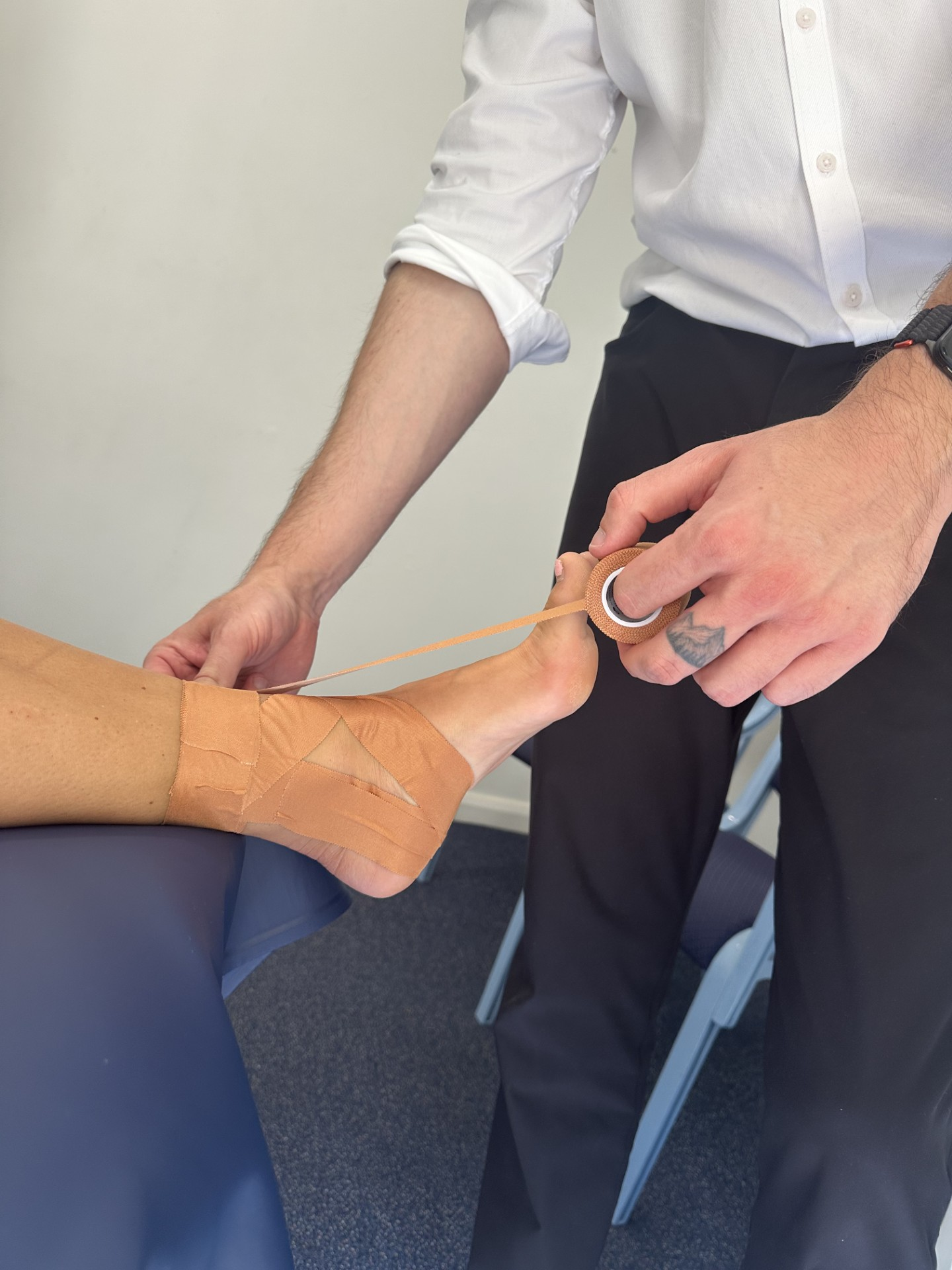
Protect a previously sprained ankle. If you've sprained an ankle before, some taping or a brace, plus some balance exercises, may help reduce the chance of it happening again.
Check your shoes. Netball-specific shoes with good grip and cushioning, as well as regularly updating these shoes when they become worn out, can help with landing and changing direction.
Don't play through it. Carrying a niggle into games often turns a small problem into a longer one.
How physio can help
Many netball injuries can be managed well with the right rehab, and good rehab also helps reduce the chance of reinjury. At Physica Knoxfield, a typical plan may include:
A thorough assessment to work out what's been injured and how badly, and whether you need imaging or a specialist opinion
Early management to settle pain and swelling, including taping or bracing where it helps
A progressive rehab program, building strength, balance, jumping, landing and change of direction
A clear return-to-play plan with sport-specific milestones.
Everyone's recovery is different, and timeframes depend on the injury. Your physio will adjust your program as you go.
When to get it checked
It's worth booking a physio assessment if:
You've sprained your ankle and it's still sore or swollen after a few days, or keeps rolling
Your knee swelled up after landing or twisting, or feels unstable
A finger is bent, won't fully straighten, or is still swollen after a week
You have a niggle that's getting worse as the season goes on
A junior player is limping or regularly complaining of knee or heel pain
Seek urgent care or see your GP straight away if you can't put any weight on the leg after an injury, there's an obvious deformity, a finger or joint looks dislocated, or there's significant pain directly over the bone.
Book a sports injury assessment at Physica Knoxfield
You don't need a GP referral to see a physio. Our team works with netballers of all ages from Knoxfield, Rowville, Scoresby, Ferntree Gully, Boronia and across the Knox area, and you can claim on the spot with HICAPS if you have private health cover with extras.
Book online or call us on 03 9764 9359 to make a time to see one of our physios today.
This article is general information only and isn't a substitute for advice about your own situation. Please speak with a health professional about your symptoms.
Written by Milly Kenny, Physiotherapist at Physica Knoxfield.