
Physica blog

Sport Assessment

Published 29 April 2026 · 11 min read

Sport Assessment
Physica Spinal & Physiotherapy

Objective evidence.
Confident decisions.

Physica Sport Clearance delivers VALD force plate assessment reports at key rehabilitation milestones — structured for surgeons, physiotherapists, and sporting teams to support evidence-based return-to-sport decisions.

Sample report — ACL reconstruction · 10 weeks post-op · Hamstring graft + LET
Critical
43%
Hamstring LSI
4th percentile · Graft-site morbidity
Critical
7th
Hip extension pct.
Glute deficit · Drives poor limb mechanics
Critical
55%
SL stabilisation asym.
1.54s operative vs 0.69s non-op
Moderate
19th
CMJ peak power pct.
36.7 W/kg · Expected at 10 weeks
Good
83rd
Quad percentile
85% LSI · Maintain & progress
Good
<3%
Hip add/abd asym.
Near-symmetrical · Well maintained
P1 Hamstrings — central focus every session. Leading re-injury predictor.
P2 Gluteus maximus — 7th pct drives tibial shear on graft.
P3 Neuromuscular control — 55% asymmetry, proprioceptive retraining essential.
Formal report delivered to referring clinician within 1 business day
Physica Active Ringwood · Priority findings · LSI benchmarking · Milestone clearance criteria
The challenge

Return-to-sport decisions shouldn't be based on time alone.

Current return-to-sport protocols rely heavily on post-operative timelines. The evidence shows this significantly underestimates re-injury risk. Objective, normative-benchmarked data changes the picture.

Time-based clearance misses hidden deficits
A patient at 9 months post ACL-R can present with a hamstring LSI of 43% and a hip extension deficit at the 7th percentile — and still be cleared on time alone. That's a re-injury waiting to happen.
Most clinics don't have access to force plate data
VALD force plates provide objective, normative-benchmarked strength and neuromuscular data. The technology exists — but access, experience and reporting capacity don't exist everywhere.
Re-injury rates remain unacceptably high
ACL re-rupture rates sit at 15–25% in young athletes. Evidence consistently shows that criteria-based return-to-sport — not time-based — is the standard that reduces this risk.
Surgeons need formal documentation
Return-to-sport clearance carries clinical and medicolegal weight. A formal, signed report with percentile data and milestone criteria provides the documentation that an appointment note cannot.
The service

Condition-specific milestones.
A formal report after every one.

Every condition has a different surgical and rehabilitation timeline. Our assessment protocols are built around each one — not a generic three-phase framework. Each assessment produces a formal report sent directly to the referring clinician.

ACL Reconstruction

Assessment
Timing
Clinical focus
Pre-op
Baseline
Before surgery
where suitable
Bilateral strength baseline · Prehab priority identification · Post-op benchmarks for comparison
Phase 1
Early rehab
12 weeks
post-operative
Graft-site morbidity · Hamstring deficit mapping · Neuromuscular control · Hip & gluteal strength
Phase 2
Mid rehab
24 weeks
post-operative
LSI progression tracking · Sport-specific loading readiness · MRSS component testing begins
Clearance
Sport clearance
40+ weeks
post-operative
Full MRSS physical testing · Hop & agility testing · Formal clearance recommendation · Signed report
LET procedures, graft type (hamstring vs patellar tendon vs quad tendon), and bilateral reconstruction may adjust timing. Reports flag all procedure-specific considerations.

Shoulder Stabilisation

Assessment
Timing
Clinical focus
Pre-op
Baseline
Before surgery
where suitable
Bilateral rotator cuff & scapular strength · Prehab priority identification · Post-op benchmarks
Phase 1
Early rehab
12 weeks
post-operative
Rotator cuff strength restoration · Scapular control · ROM benchmarks · Early loading tolerance
Clearance
Sport clearance
20 weeks
post-operative
Overhead loading capacity · Sport-specific strength profile · Return-to-throw / return-to-contact readiness
Applies to Bankart repair, Latarjet procedure, and capsular reconstruction. Timing may vary with procedure complexity and sport demands.

Meniscal Repair

Assessment
Timing
Clinical focus
Pre-op
Baseline
Before surgery
where suitable
Quad & hamstring strength · Single-leg load capacity · Joint offloading patterns pre-repair
Phase 1
Early rehab
8 weeks
post-operative
Early quad activation · Joint loading tolerance · Asymmetry mapping · Weight-bearing progression
Bespoke
As indicated
Clinically indicated
on referral
Tailored to repair type, patient activity goals, and surgeon protocol — scheduled on clinical indication
Meniscal protocols vary significantly by repair type (root vs partial vs total meniscectomy), tissue quality, and weight-bearing progression. Subsequent assessments are scheduled on clinical indication rather than fixed milestones.

FAI & Hip Instability

Assessment
Timing
Clinical focus
Pre-op
Baseline
Before surgery
where suitable
Hip abductor / flexor / extensor strength · Pelvic control · Single-leg mechanics baseline
Phase 1
Early rehab
12 weeks
post-operative
Hip strength restoration · Gait symmetry · Early load tolerance · Pelvic stability
Clearance
Sport clearance
24–28 weeks
post-operative
Full hip strength & symmetry profile · Sport-specific loading · Return-to-activity readiness
Applies to FAI arthroscopy, hip labral repair, and hip instability reconstruction. Timing varies with procedure complexity and pre-operative condition.

Other / Bespoke

Assessment
Timing
Clinical focus
Pre-op
Baseline
Before surgery
where suitable
Bilateral strength baseline · prehab priority identification · post-operative benchmarks for comparison
Assessment
Post-op
As indicated
by clinician
Strength & neuromuscular profile · LSI mapping · percentile benchmarking · priority findings P1–P5
Clearance
Return to sport / life
Clinician-guided
timing
Full readiness profile · formal clearance recommendation · signed report to referring clinician
Applicable to any post-surgical or non-surgical presentation — ankle ligament reconstruction, rotator cuff repair, spinal surgery, return to work, return to life, and more. Assessment timing and focus are determined in consultation with the referring clinician.
Assessment packages

Packages shown are matched to the condition selected above. All include a formal report delivered to the referring clinician within 1 business day.

ACL Reconstruction

ACL — post-surgery entry
ACL Post-Op Program
3 post-op reports — for patients without a pre-op baseline
$455
3 assessments · save $40
  • 12-week early rehab report
  • 24-week progress check
  • 40+ week sport clearance (MRSS-integrated)
  • Longitudinal comparison across all 3
ACL patients presenting post-surgery
Single assessment
Single Assessment
One VALD assessment + formal report — any timing
$165
 
  • Full VALD force plate assessment
  • Normative-benchmarked report
  • Priority findings & recommendations
  • Milestone clearance criteria
One-off clearance · mid-rehab referral
Club & team packages
Bulk rates for sporting clubs & schools. Seasonal monitoring available.
POA — contact us

Shoulder Stabilisation

Single assessment
Single Assessment
One VALD assessment + formal report — any timing
$165
 
  • Full VALD force plate assessment
  • Normative-benchmarked report
  • Priority findings & recommendations
  • Milestone clearance criteria
One-off clearance · mid-rehab referral

Meniscal Repair

Single assessment
Single Assessment
One VALD assessment + formal report — any timing
$165
 
  • Full VALD force plate assessment
  • Normative-benchmarked report
  • Priority findings & recommendations
  • Milestone clearance criteria
One-off clearance · mid-rehab referral

FAI & Hip Instability

Single assessment
Single Assessment
One VALD assessment + formal report — any timing
$165
 
  • Full VALD force plate assessment
  • Normative-benchmarked report
  • Priority findings & recommendations
  • Milestone clearance criteria
One-off clearance · mid-rehab referral

Other / Bespoke

Any condition
Two-Assessment Package
Any 2 assessments — you choose the timing
$315
2 assessments · save $15
  • Pre-op baseline + post-op report, or
  • Any 2 post-op milestone assessments
  • Comparison report on second assessment
  • Milestone clearance criteria
  • Signed reports within 1 business day each
Flexible — timed to your clinical protocol
Any condition
Three-Assessment Package
Any 3 assessments — pre-op through clearance
$455
3 assessments · save $40
  • Pre-op baseline + 2 post-op reports, or
  • Any 3 milestone assessments
  • Longitudinal comparison across all 3
  • Priority findings updated at each assessment
  • Signed reports within 1 business day each
Full rehab pathway for any condition
Not sure which package suits your patient? Email us at physio@physica.com.au with the condition and post-op stage and we'll recommend the right assessment pathway. Club and team bulk packages also available — POA.
Simple from start to finish

How a referral works

1
You refer the patient
A simple referral — phone, email, or fax. We contact the patient directly to schedule. No paperwork burden on your end.
2
We assess using VALD force plates
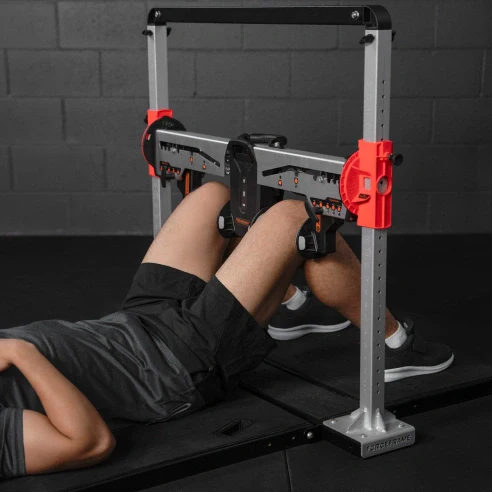
A 45–60 minute assessment at Physica Active — Ringwood. Bilateral strength testing, neuromuscular control, and functional performance across all relevant muscle groups.
3
You receive the report
A formal clinical report within 1 business day — sent directly to you. Normative-benchmarked, percentile-ranked, with clear priority findings and milestone criteria.
4
Your patient, your call
We provide the data. You make the clinical decision. The patient returns to your care. If they have no existing physio and want to continue with Physica, we discuss that with you first.
Our approach
Think of us like an MRI provider.
Return-to-sport is one of the most consequential decisions in musculoskeletal care. That decision must always rest with the treating clinician — the surgeon who operated, or the physiotherapist managing the rehabilitation.

What Physica Sport Clearance provides is another piece of the clinical jigsaw. Objective force plate data — benchmarked, ranked, and formally reported — so that decision is made with as complete a picture as possible.

Think of it like an MRI: the radiologist doesn't decide whether your patient needs surgery. But the image makes your decision a better one.
The decision is always yours. We give you the objective evidence to make it with confidence.
Melbourne Return to Sport Score

Our reports feed directly into your MRSS scoring.

MRSS — Score Components / 100
Clinical examination
Lachman, pivot shift, swelling, ROM — by surgeon
25 pts
IKDC subjective questionnaire
Patient-reported knee function score
25 pts
Physical performance testing
Hop tests · Balance · Agility · SL squats — this is us
50 pts ✓
✓ Clearance threshold: MRSS score ≥ 95 / 100

The Melbourne Return to Sport Score (MRSS) is a validated, widely-used tool for ACL return-to-sport decisions. It scores out of 100 across three components — and the physical testing component, worth 50 points, is exactly what VALD force plates measure.

When you refer a patient to Physica Sport Clearance, our Phase 3 report is structured to directly provide the physical testing component of your MRSS scoring — hops, balance, agility, and single-leg squats, benchmarked against normative data.

The result: you receive the 50-point physical testing component as a formal, signed document. Combined with your clinical examination and the patient's IKDC score, you have a complete MRSS — evidence-based, documented, defensible.

Not just for ACL. While the MRSS is specific to knee reconstruction, the same VALD assessment framework applies to shoulder stabilisation, meniscus repair, hip reconstruction, and return-to-life goals for non-sporting patients. The report structure adapts to the injury.
The report

A clinical document, not a gym printout.

Every Physica Sport Clearance report is produced by a qualified physiotherapist and structured as a formal clinical document — ready to file, share, and act on.

Normative percentile benchmarking
Every result is benchmarked against age and sex-matched athletic population data. You see not just the number, but where it sits relative to what should be expected at this stage of recovery.
Limb Symmetry Index (LSI) for all bilateral measures
LSI is reported for every bilateral test — the clearest indicator of inter-limb asymmetry and the primary predictor of re-injury risk in the return-to-sport literature.
Ranked priority findings (P1–P5)
Deficits are ranked by clinical urgency with specific exercise recommendations for each. The referring clinician receives a clear rehabilitation roadmap — not a list of numbers to interpret alone.
Milestone clearance criteria
Each report specifies measurable criteria the patient must meet before advancing — turning a subjective clinical decision into an objective, documented one.
Who we work with

Designed for the clinicians making return-to-sport decisions.

Physiotherapists & Rehab Clinics
You run the rehab. We provide the data you can't.
"I need objective strength data at milestone appointments but don't have force plate access."
Refer your patient for a VALD assessment at any milestone. The report comes back to you within 1 business day. Your patient, your program — we add the objective layer.
Orthopaedic Surgeons
Formal data at 3, 6 and 9 months. Structured for your MRSS.
"I clear patients on time and clinical exam. I'd value objective functional data but don't have capacity to run it."
We deliver a signed assessment report timed to your post-op review schedule. The Phase 3 report is structured to provide the physical testing component of your MRSS scoring.
Sporting Clubs & Teams
Know exactly where your athlete is before they return to training.
"We need to know if our athlete is actually ready — not just medically cleared."
Club and team assessment packages available. Milestone monitoring across a season. Data-driven return-to-play decisions that protect your athletes and your competition schedule.
Our commitment to referring clinicians

We supplement your care. We never replace it.

If you're considering referring a patient to Physica Sport Clearance, here's exactly how we handle your referral relationship.

Your patient stays yours
If a patient has an existing physio or surgeon managing their care, they return to that clinician after the assessment. We do not contact the patient about ongoing Physica services.
Report goes to you first
The assessment report is sent directly to the referring clinician before the patient. You receive the findings first — always.
We stay in our lane
We assess and report. We do not make treatment decisions, override clinical judgement, or provide rehabilitation advice that contradicts the referring clinician's program.
Transparent if a patient continues with us
If a referred patient has no existing physio and wishes to continue with Physica for rehabilitation, we discuss this with you before accepting them. No silent patient acquisition.
Get started

Ready to refer a patient?

Call us directly, send a referral letter, or email our clinical team. We'll contact the patient, schedule the assessment, and have a report back to you within 1 business day.

Or email: physio@physica.com.au  ·  Physica Active, Ringwood

This article is general information, not individual medical advice or a diagnosis. Content is preserved from Physica’s original publication; your clinician can advise on current guidance and your individual circumstances.

Book online